

Leasing retail space typically takes 6-10 months from broker engagement to opening day. This roadmap breaks down the process into nine essential phases that every tenant should understand before signing a lease.
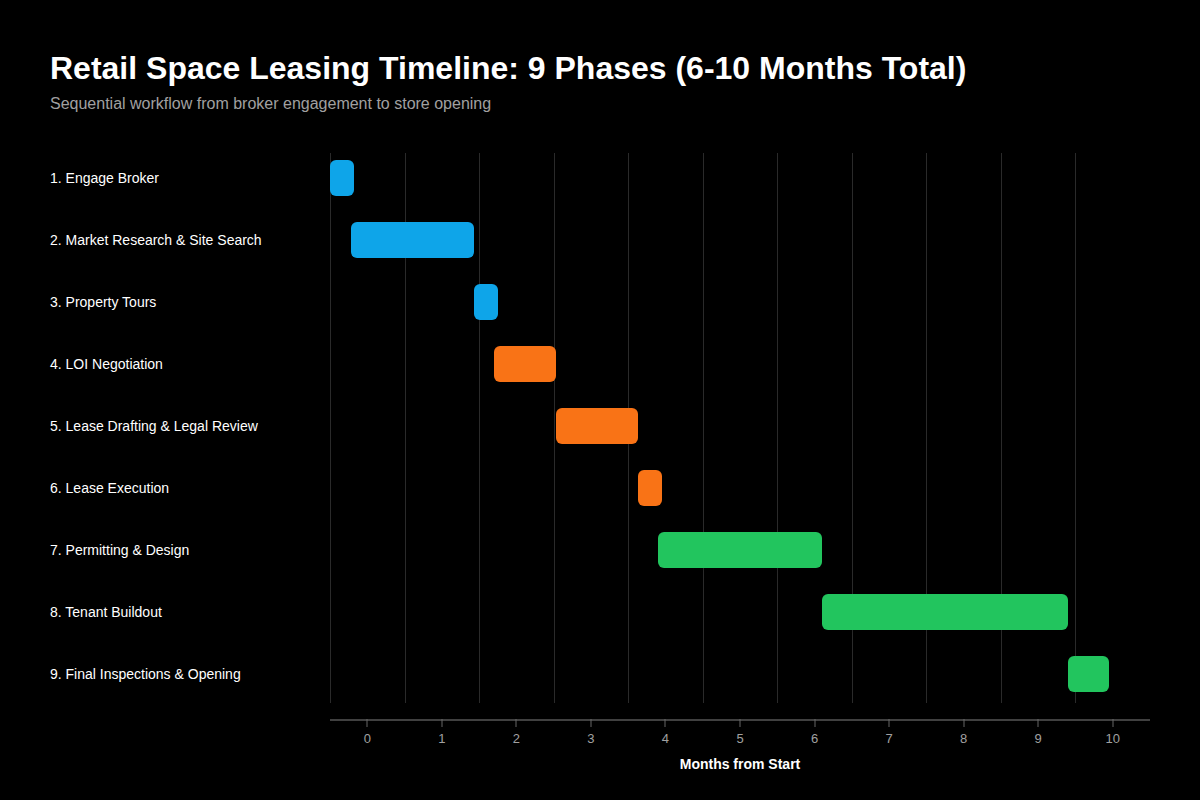
Phase 1: Engage a Tenant Representation Broker (1-2 Weeks)

Start by hiring a tenant representation broker who works exclusively for you, not the landlord. These brokers are paid by the landlord through the lease commission structure, so representation costs you nothing out-of-pocket while providing significant value.
Key Actions:
– Interview 2-3 brokers with experience in your retail category
– Define your requirements: square footage, budget, target demographics, timeline
– Sign an exclusive representation agreement
– Establish your wish list for location characteristics and deal terms
A good broker brings market intelligence on available spaces (including off-market opportunities), current rental rates, landlord negotiating patterns, and leverage to secure better terms than tenants can achieve alone.
Phase 2: Market Research & Site Search (1-2 Months)

Your broker conducts a comprehensive market survey while you analyze demographics and competition to validate potential locations.
Broker Activities:
– Search Loopnet, CoStar, Crexi, and proprietary databases for available properties
– Tap landlord relationships for off-market opportunities
– Compile rental rates, operating expenses, and TI allowances
– Create a shortlist of 5-10 properties matching your criteria
Your Due Diligence:
– Analyze demographics within 1-3-5 mile radii (income, age, household composition, spending patterns)
– Map competitors and assess market saturation
– Study traffic counts and accessibility patterns
– Review psychographic data to ensure lifestyle alignment with your target customer
In competitive markets, quality spaces can move quickly, so this phase requires both patience and decisiveness when the right opportunity emerges.
Phase 3: Property Tours (1-2 Weeks)

Tour your shortlisted properties to assess physical condition, location quality, and operational viability.
Tour Checklist:
– Visibility from major roads and signage opportunities
– Parking adequacy during peak periods (visit at busy times)
– Interior condition and needed improvements
– HVAC, electrical, plumbing capacity
– Ceiling height, columns, layout constraints
– Co-tenant mix and anchor tenant strength
– Evidence of deferred maintenance
Visit properties multiple times at different times of day. Drive the surrounding trade area and talk to neighboring business owners to understand traffic patterns, landlord responsiveness, and any issues not apparent from data.
Phase 4: Letter of Intent (LOI) Negotiation (2-4 Weeks)

Once you select your preferred location, your broker negotiates the LOI—a non-binding document outlining principal lease terms before formal drafting begins.
Critical LOI Terms:
– Base rent ($/SF annually) and lease term (typically 5-10 years with renewal options)
– Tenant improvement (TI) allowance (varies by market, typically $25-$75+ per SF)
– Rent commencement date (should begin after CO receipt, not possession)
– Free rent period (typically 1-3 months for build-out)
– Exclusive use provisions (prevents landlord from leasing to direct competitors)
– Operating expense structure and CAM charge caps
Expect 2-4 weeks of back-and-forth negotiation. Landlords typically respond within 3-5 business days per round. Your broker’s market knowledge is invaluable here—they know what concessions landlords will grant and how to structure terms favorably.
Phase 5: Lease Drafting & Legal Review (3-6 Weeks)

After LOI acceptance, the landlord’s attorney drafts the formal lease agreement. Engage your own commercial real estate attorney immediately to review and negotiate the document.
Attorney Review Focus:
– Verify LOI terms are accurately reflected
– Negotiate CAM exclusions (capital improvements, landlord overhead, leasing costs)
– Clarify maintenance responsibilities and repair obligations
– Secure assignment/subletting rights with reasonable approval criteria
– Define default provisions with notice and cure periods
– Establish rent escalation mechanics (2-3% annually is standard)
Attorney fees typically run 10-15 hours for competent review and negotiation—a worthwhile investment given the multi-year commitment. Expect 2-4 rounds of redlined revisions before both parties reach final agreement.
Phase 6: Lease Execution (1-2 Weeks)

Sign the finalized lease and deliver required payments and documentation.
Execution Requirements:
– First month’s rent and security deposit (typically 1-3 months)
– Certificate of insurance naming landlord as additional insured
– Personal guarantee documents if required
– Business formation documents (LLC operating agreement, etc.)
– Signed lease by all parties
Verify the final document matches negotiated terms before signing. Once executed, obtain keys and access credentials to begin improvement work.
Phase 7: Permitting & Design (6-12 Weeks)

Engage an architect to develop space plans and secure building permits. This phase typically takes 6-12 weeks due to municipal review processes and regulatory requirements.
Design Development:
– Floor plans optimizing customer flow and operations
– Electrical, HVAC, and plumbing layouts
– Finishes, materials, and color specifications
– Lighting design and fixture placement
Required Permits:
– Building permit for interior modifications
– Mechanical, electrical, plumbing permits as needed
– Fire safety review for exits and suppression systems
– Signage permit (separate application, 2-8 weeks)
Submit complete, professional applications to expedite approval. Incomplete submissions trigger rejections that add 1-3 week resubmittal cycles. Consider using permit expediting services for complex projects to accelerate timelines.
Phase 8: Tenant Buildout (2-4 Months)

Construction represents the longest phase, typically requiring 2-4 months depending on scope and complexity.
Build-Out Costs (National Averages):
– Standard retail: $140-$190 per square foot
– Budget concepts: $50-$100 per square foot
– Specialized retail (medical, wellness): $150-$250 per square foot
Key Cost Drivers:
– HVAC and mechanical systems (19% of project costs)
– Carpentry, doors, partitions (17%)
– Electrical work and systems (11-12%)
– Finishes, painting, flooring (8-10%)
Solicit bids from 3+ general contractors with retail experience. Hold weekly progress meetings to address issues proactively and maintain schedule adherence. Budget 2-3 week contingency buffers for permit revisions, material delays, or unforeseen conditions.
If your lease includes a TI allowance, understand disbursement mechanics. Most landlords require tenants to front costs and reimburse upon completion with proper documentation (paid invoices, lien waivers, architect certification, CO).
Phase 9: Final Inspections & Opening (2-3 Weeks)

As construction completes, coordinate final inspections and obtain your certificate of occupancy (CO)—the legal authorization to open for business.
Inspection Requirements:
– Electrical, plumbing, HVAC systems review
– Fire safety and exit compliance
– ADA accessibility verification
– Health department approval (if applicable)
Inspectors issue approval or a punch list of required corrections. Address deficiencies immediately—failed inspections delay your opening timeline. COs typically issue 3-7 days after final inspection approval.
Pre-Opening Preparation:
– Staff hiring and training (begin 4-6 weeks before opening)
– Inventory ordering and merchandising (arrive 2-3 weeks before opening)
– POS and technology systems setup and testing
– Business licenses and regulatory permits
– Marketing launch and community outreach (6-8 weeks before opening)
You cannot legally operate without a CO. Schedule your grand opening only after receiving this authorization to avoid fines, forced closure, or lease default issues.
Critical Success Factors
Timeline Realism: The complete process typically requires 6-10 months from broker engagement to opening. Aggressive timelines create stress, increase costs, and compromise quality. Build realistic schedules with contingency buffers.
Financial Planning: Budget comprehensively beyond rent and TI allowance. Include FF&E, initial inventory, marketing costs, professional fees (attorney, architect, contractor), working capital for 3-6 months of operations, and 25-30% capital reserve for overruns.
Professional Team Quality: Experienced tenant brokers negotiate superior terms that offset their commission through increased TI allowances and rent concessions. Qualified attorneys identify legal risks landlords won’t disclose. Competent contractors deliver on-time, on-budget construction.
Due Diligence Rigor: Verify zoning compliance, investigate area development plans, interview neighboring tenants about landlord responsiveness, and confirm utilities have adequate capacity. Discovering deal-breaking issues after lease execution creates exponentially larger problems.
Conclusion
Leasing retail space is one of the most consequential business decisions you’ll make, with implications extending years into your future. Success comes from methodically executing each phase—from engaging qualified representation through negotiating protective lease terms to managing construction professionally.
Begin with Phase 1: hire a qualified tenant representation broker who will serve as your advocate throughout the 6-10 month journey ahead. The investment in professional representation returns multiples through superior locations, favorable lease terms, and avoided pitfalls that plague tenants who navigate this complex process alone.
—
Need help navigating the retail leasing process? I specialize in tenant representation for retail and medical spaces. Let’s discuss your requirements.
Tristen Palori
📞 512-580-7800
🏢 Foresite Commercial Real Estate
License: #717593 Information About Brokerage Services